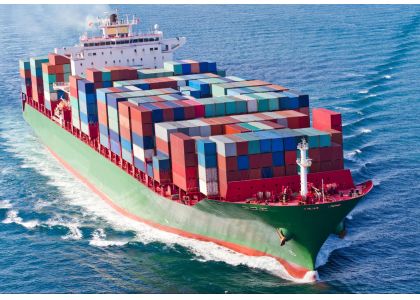
Since the beginning of 2026, geopolitical security risks in the Red Sea have forced nearly all shipping lines to reroute via the Cape of Good Hope, driving global ocean freight rates for refrigerated containers (reefers) carrying frozen fruits and vegetables into a sustained upward trend. The latest logistics data tracked by the European Commodities Committee indicates that spot rates for 40-foot reefer containers on key frozen berry routes—such as those from South America and Peru to Europe—have risen by 32%–41% month-over-month. Shipping companies have imposed multiple surcharges on top of base freight rates, including war risk surcharges, bunker adjustment factors (BAF), equipment shortage surcharges, and port congestion fees. For importers specializing in frozen berries, stone fruits, and vegetable processing ingredients, these soaring ocean freight costs have triggered widespread "cost inversion"—a situation where the total landed cost of frozen produce (FOB price at origin + refrigerated ocean freight + inland cold chain logistics + customs clearance and inspection fees) exceeds the wholesale purchase price that local food processors and distributors are willing to pay. This issue emerged as the central crisis facing the European frozen agricultural produce import industry in the third quarter of 2026.
I. Key Drivers Behind Rising Reefer Freight Rates
Rerouting via the Cape of Good Hope adds 12–15 days to the voyage compared to the Suez Canal route, significantly increasing fuel and electricity costs for refrigeration on each reefer vessel. Shipping lines are passing these additional operational costs on to shippers through rate hikes.
Extended voyage times have slowed vessel turnaround cycles, leading to an acute shortage of global reefer containers. Reefer plug-in utilization rates at the ports of Rotterdam, Hamburg, and Le Havre have reached 94%, and shipping lines are imposing mandatory equipment shortage surcharges of $800–$1,300 per 40-foot reefer container.
Global diesel prices have risen by 18% since June 2026, further driving up fuel surcharges for all temperature-controlled cargo.
The Peru-Europe route—heavily linked to the soft fruit trade—has seen the sharpest increases: the current freight rate for a 40-foot reefer container carrying frozen blueberries or raspberries is $13,100,
up from $8,900 in early June—a 47% increase over six weeks. According to the Freightos Baltic Index (FBX)
data from July 10, reefer freight rates for frozen berries and vegetables on the Asia-Europe route rose by 37% in a single week, reaching $12,850 per container.
II. Fruit and Vegetable Importers Face a "Cost-Price Inversion" Crisis
Field visits to over 30 European importers of frozen fruits and vegetables revealed that more than 65% of small and medium-sized enterprises (SMEs) have recently encountered significant cost-price inversion—where costs exceed market selling prices—on shipments arriving at ports. Take Peruvian frozen blueberries as an example: the average FOB price from Peruvian processing plants is $1.25/kg; adding $0.42/kg for allocated refrigerated shipping costs and $0.28/kg for miscellaneous expenses (such as inland cold-chain logistics, inspections, and tariffs) brings the total landed cost to $1.95/kg. However, local European processing plants purchasing frozen raw materials in bulk are willing to pay a maximum of only $1.72/kg. Consequently, importers incur a direct loss of $0.23 for every kilogram imported. Similar pressure regarding losses affects imports of Polish frozen raspberries, Chinese frozen strawberries, and mixed quick-frozen vegetables. While large, diversified import groups can mitigate some losses through long-term shipping contracts and bulk purchasing discounts, small and independent importers—lacking such bargaining power—are unable to hedge against these losses. Since mid-July, more than half of these enterprises have suspended new import orders to prevent further financial losses.
III. Ripple Effects on the Global Berry Supply Chain
European importers have significantly cut back on purchasing high-freight soft berries from South America, accelerating a shift toward Chinese-produced frozen berries, which offer shorter shipping distances and lower per-unit costs. Mid-sized European importers have already fully booked the 10,000 tons of EU-compliant domestic frozen blueberries mentioned earlier to ease the burden of high shipping costs. Meanwhile, orders for frozen fruit exports from Peru, Poland, and Romania have weakened, as European buyers delay signing long-term contracts for the new season while waiting for freight rates to drop. Agricultural trade analysts warn that if refrigerated shipping rates remain at current high levels, many small- and medium-sized Western European importers of quick-frozen fruits and vegetables will face cash-flow strain or even temporary operational shutdowns.
NRL FOOD is located in Tianjin, China, 30km from the Tianjin port. The total investment of the company is more than 20 million RMB. The existing staff is more than 50 people, all of which the core technicians have more than 5 years of snack products production experience. We have 8 advanced freeze dried production line, 20 vacuum fried production lines, 60 kinds of different fruit and vegetable chips, 1500 Ton fruit and vegetable chips annual. The products we supplied are certificated by HACCP, KOSHER......[ read more>>]